Mauritania is safe for tourists in 2026 who follow FCDO guidelines and avoid border regions near Mali and Algeria. Petty crime in Nouakchott and terrorism in remote eastern areas are the primary risks. Female travellers must observe hijab and modest dress norms; strict alcohol prohibition applies nationwide. The FCDO advises against all travel to border regions and increased caution for the remainder of Mauritania. UK visitors must monitor the security situation, carry a fiche de circulation for military checkpoints, register their trip with the FCDO before departure, and obtain comprehensive travel insurance covering medical evacuation and security incidents.
Mauritania Travel Advisory – What the FCDO Says in 2026
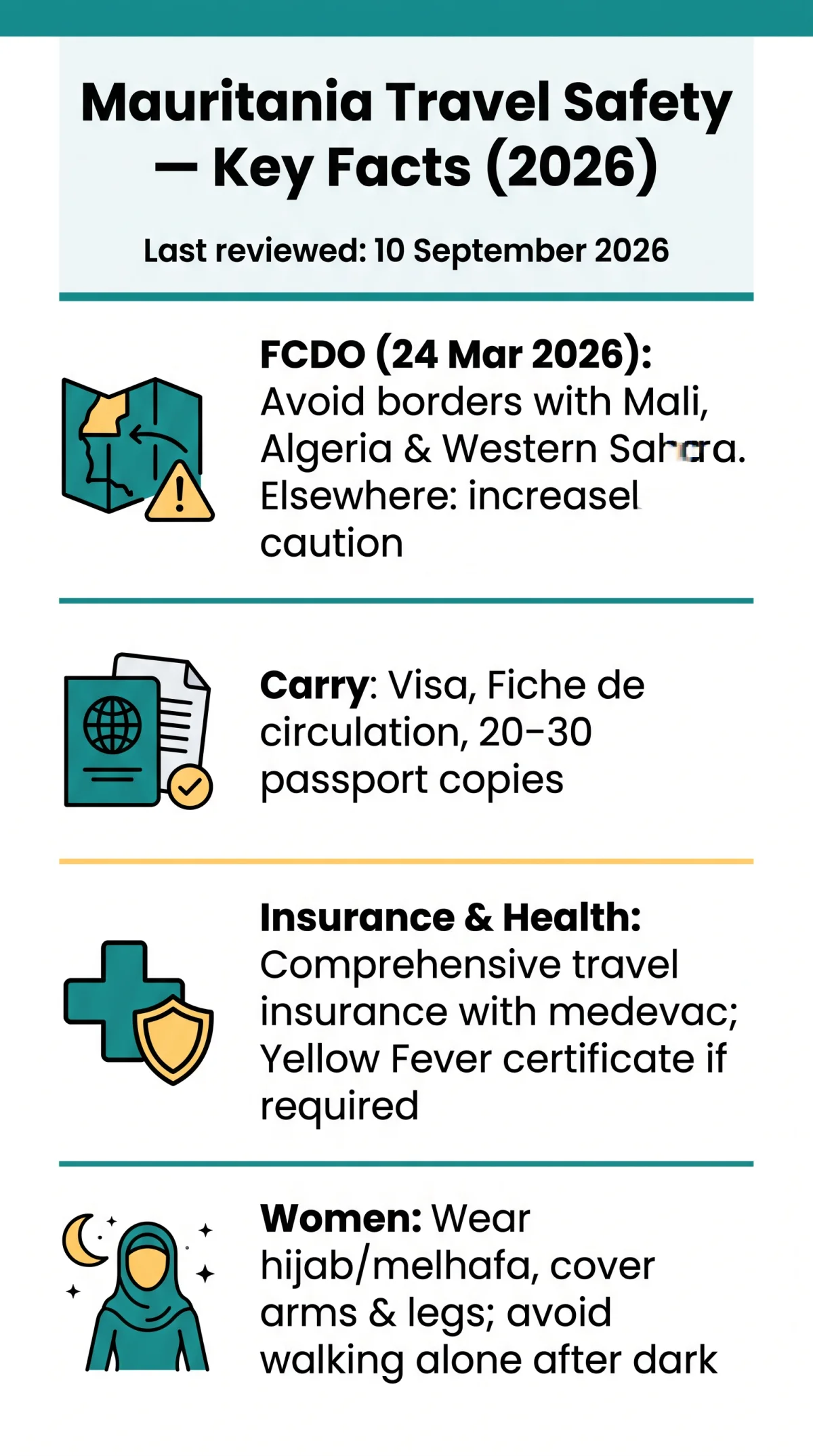
According to the FCDO (gov.uk), the current travel advisory for Mauritania (updated 24 March 2026) advises against all travel to border regions with Mali, Algeria, and Western Sahara, while the remainder of Mauritania carries an “advise increased caution” level. British travellers should register their trip via the gov.uk Mauritania travel advice portal before departure.
Other governments align with this cautious stance. The US State Department urges travellers to “reconsider travel” to Mauritania, citing terrorism, crime, and limited health infrastructure. Canada advises avoiding non-essential travel due to terrorism threats against Western interests, and Australia’s Smartraveller (updated 14 May 2026) similarly recommends reconsidering the need to travel. Ireland’s advisory flags a high risk of terrorist attacks and kidnapping in Mauritania.
Terrorism, Crime, and Kidnapping Risks in Mauritania
AQIM and ISIS-Sahel affiliates across the Sahel concentrate terrorism and kidnapping threats near the eastern border with Mali and the northern border with Algeria. According to FCDO (gov.uk), the advisory level for these border zones of Mauritania remains “advise against all travel” as of the 24 March 2026 update.
Kidnapping risk for Westerners is rated high, particularly in Nouakchott and Atar. Petty crime in Mauritania is moderate but steadily increasing, with pickpocketing and scams reported in Nouakchott’s port and market districts. Safety precautions include avoiding walking alone after dark and using pre-arranged transport for evening movement.
Landmine risks persist off-track near the Western Sahara border and along the Nouadhibou to Choum iron ore train route in Mauritania; visitors must stay on established paths.
Regional Risk Map: Where to Go and Where to Avoid
| Region | Risk Level | Advice |
|---|---|---|
| Nouakchott (capital) | Moderate | Generally safe by day; avoid port and market areas at night; petty crime present |
| Adrar / desert interior | Moderate | Safe with a registered guide; limited infrastructure; carry supplies |
| Eastern border (Mali) | High | FCDO: avoid all travel due to terrorism, kidnapping, and armed groups |
| Northern border (Algeria) | High | FCDO: avoid all travel due to terrorism and smuggling routes |
| Western Sahara territory | High | FCDO: avoid all travel due to landmines, military presence, and territorial dispute |
| Nouadhibou to Choum train route | Moderate to High | Popular but gruelling; stay on track; off-path areas may contain landmines |
Dress Code, Hijab, and Safety for Women in Mauritania
The hijab is not legally mandated in Mauritania, but cultural expectation is strong outside Nouakchott; head covering is recommended in all public areas. A melhafa – a traditional wrap covering the shoulders, chest, and knees – reduces unwanted attention significantly and is the standard garment worn by Mauritanian women.
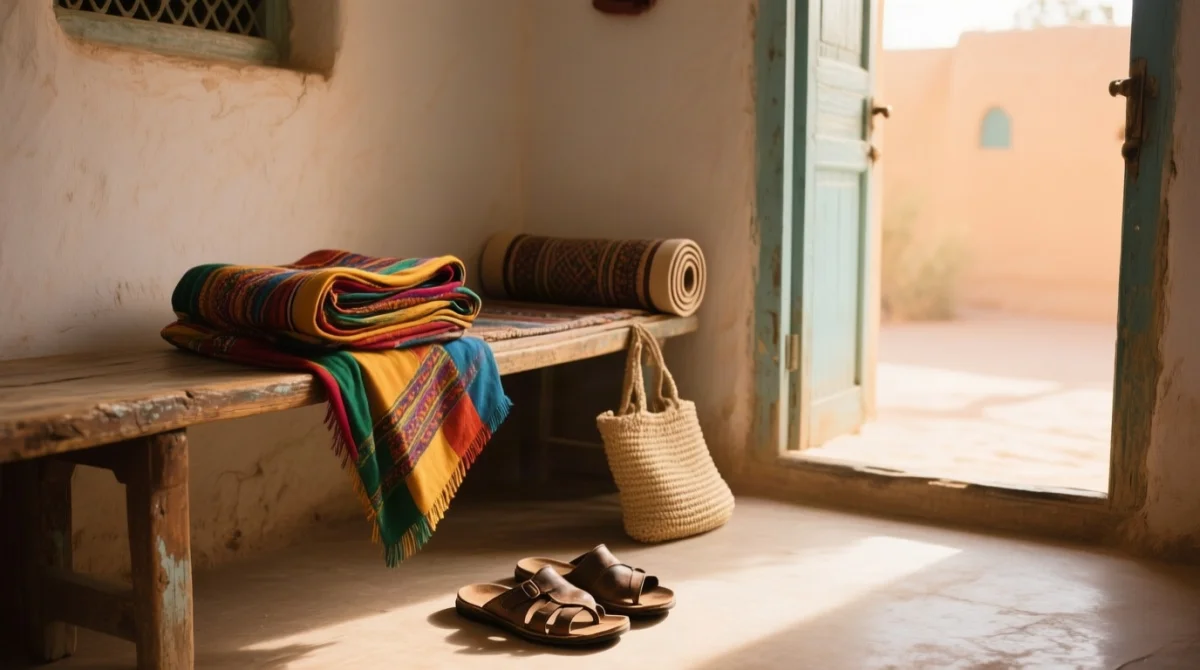
In Nouakchott, norms are comparatively relaxed, though modest clothing remains advisable. In conservative interior cities and rural communities of Mauritania, full hijab compliance and loose-fitting garments are expected at markets, mosques, and private home visits. A packing checklist for Mauritania should include a melhafa, long sleeves, maxi skirt, closed-toe shoes, and a headscarf.
Dress Code Guidelines for Men
Shorts are acceptable in Nouakchott coastal areas but disrespectful in rural areas and the interior of Mauritania. Sleeveless shirts should be avoided in public and are prohibited in mosques. Travellers should remove footwear before entering any place of worship and opt for long trousers in conservative regions.
Is Mauritania Safe for Solo Female Travellers?
Solo women can travel Mauritania safely with strict modest dress, daytime movement, and a trusted local escort for interior regions. Verbal harassment is manageable; dress code compliance acts as a safety shield. Women should avoid walking alone after dark and choose reputable accommodation with female-friendly staffing.
Cultural Norms and Etiquette Every Tourist Should Know in Mauritania
Accept mint tea (Ataya) with your right hand, greet with “salaam aleikum,” and never eat, drink, or smoke publicly during Ramadan daylight hours in Mauritania. Local customs emphasise hospitality – refusing Ataya can cause offence; politely accept at least one glass.
Alcohol import, possession, and consumption are fully prohibited under Mauritanian law, with confiscation and possible legal prosecution for tourists. Homosexuality is illegal under Mauritania’s penal code, with penalties up to 3 years’ imprisonment and no legal protection for LGBTI+ visitors.
Photography restrictions in Mauritania are strict: photographing military sites, government buildings, or people without consent risks camera confiscation and detention. Cultural sensitivity toward local customs is essential for a trouble-free visit.
Practical Travel Essentials for Mauritania – Visa, Checkpoints, and Health
Visa
Required for UK citizens before arrival in Mauritania.
Fiche de circulation
Carry 20-30 printed passport photocopies for routine military and police checkpoints across Mauritania.
Yellow Fever certificate
Required if arriving from or transiting through a risk country; carry the original at immigration.
Travel insurance
Comprehensive policy covering medical evacuation and security incidents is essential for Mauritania, given limited health infrastructure outside Nouakchott.
Embassy registration
Register your trip with FCDO before departure via gov.uk/foreign-travel-advice/mauritania.
Last reviewed: 10 September 2026. This guide is based on FCDO advisories and traveller feedback. It does not constitute legal or professional travel advice.
Mauritania Travel Safety FAQ
Is Mauritania safe for British tourists in 2026?
Yes – FCDO permits travel outside border regions (Mali, Algeria, Western Sahara) but flags terrorism, petty crime, and kidnapping as key risks (24 March 2026 update).
Do women have to wear a hijab in Mauritania?
No law mandates hijab in Mauritania, but cultural expectation is strong. Modest clothing covering hair, arms, and legs is recommended outside Nouakchott.
What areas of Mauritania should tourists avoid?
Avoid all border zones with Mali, Algeria, and Western Sahara in Mauritania due to terrorism, kidnapping, and landmine threats per FCDO advice.
How dangerous is Mauritania for solo female travellers?
Street harassment occurs in Mauritania but is manageable with modest dress, daytime movement, and avoiding isolated areas without a trusted local contact.
Is it safe to walk around Nouakchott at night?
Avoid walking alone after dark in Nouakchott – especially port and market districts. Use pre-arranged transport for all evening travel.
Can you drink alcohol in Mauritania?
No – alcohol import, possession, and consumption are fully prohibited under Mauritanian law. Tourists face confiscation and possible prosecution. Zero tolerance nationwide.
Do I need a Yellow Fever certificate to enter Mauritania?
Required if arriving from or transiting through a risk country. Carry the original document and present it at immigration in Mauritania.
Is the Iron Ore Train ride in Mauritania safe?
Physically gruelling but generally safe. Stay on established track routes and avoid off-path areas near the Western Sahara border due to landmine risks.